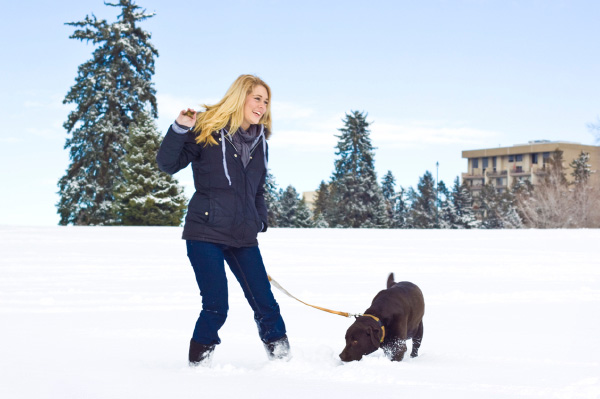
Watch out for antifreeze -- it is extremely lethal for cats and dogs. According to the ASPCA, a way to protect your pets from antifreeze poisoning is to switch to products that contain propylene glycol instead of ethylene glycol because the taste and the scent are less appealing for animals. Another way to prevent antifreeze poisoning make sure you wipe down your dogs' feet and belly after walks in case your dog walked through any spills.
Winter is an extremely dangerous time for outdoor cats because they often seek out warm places. Under the hood of cars is one of their favourite spots to warm up, but once the car is started, it can cause injuries and death if they get stuck on the fan belt. To avoid this from happening, bang on the hood of your car -- if there is a cat under there, the noise will scare him out!
Keeping your cat outdoors in winter is quite unsafe; many factors can contribute to the loss of your cat. The best way to protect your cat from predators, freezing and diseases from stray cats is to bring your cat in during the winter or keep them in a heated garage or barn. Make sure to clean up any antifreeze and watch for future spills.
Dogs need walks even in the cold, so make sure to wipe their feet with a warm damp cloth after walks to ensure that salt and magnesium chloride and other chemicals are not stuck to their paws. If their feet are not cleaned off after walks, their pads can bleed or they may ingest poison.
Dogs love walking and running in parks, and the cold weather usually does not slow them down. But if you take your dog walking around reservoirs or ponds, make sure to keep them on their leash -- if they run out on the ice, it can break beneath them and they will fall through.
During the winter months, your pets burn more calories just to stay warm, so make sure that they are getting enough food. Dogs, cats and horses all need extra food during colder months.
If you keep your pet's water bowl outside in winter, make sure to trade out any metal bowls with a ceramic or plastic bowl, otherwise your pet's tongue could get stuck to the metal.
Make sure you check your pets water supply; if the bowl is freezing over, your pet may face dehydration and injury. For most pets, you can buy a heated water bowl or bucket (for horses) that will keep the water from freezing.
Horses that have thinner coats usually need blankets during the winter. You need to make sure, however, that your horse's skin is not being irritated or dried out by the blanket and that you continue to groom your horse in the winter months.
While the Humane Society of the United States (HSUS) urges pet owners to keep their pets indoors during winter, a heated doghouse can be an alterative for protecting your pet from the outdoors. As a pet owner, you do need to make sure the doghouse is properly constructed and that you replace blankets and insulation when necessary.
Never leave your pet unattended in a vehicle during winter. According to the ASPCA, your car acts like a refrigerator keeping the cold air in which can cause your pet to freeze to death.
Puppies are great, but if you are planning on keeping your puppy as an outside pet, do not do it until the following winter. Puppies have thinner fur and are far more sensitive to cold weather than older dogs.


