Showing posts with label Children's Health. Show all posts

Tuesday, July 5, 2011

How to deal with child food sensitivity?


In any discussion of common childhood food allergies, peanuts are sure spring to mind as the worst offender. However, kid food allergies can include a whole array of things such as milk, soy, tree nuts, eggs, shellfish, even strawberries. While experts advise us to expose children to a wide range of healthy foods to expand their palates and even prevent allergies, there is always the chance of an unexpected and adverse reaction, especially today when so many children suffer from nut allergies, gluten allergies, dairy or milk allergies and citrus allergies.

 How is an Allergy Different than a Sensitivity

The good news, according to The Journal of the American Medical Association, is that only 8% of kids have true food allergies. So how is an allergy different than a sensitivity? A true allergic reaction involves a response from the immune system and happens within a few minutes to an hour of eating a particular food. In extreme cases, even touching or smelling the food can cause a reaction.

The immune system perceives the food as harmful and launches an attack by releasing histamine, almost like the body’s own little chemical weapon.   Histamine causes inflammation, which then causes symptoms like itching, hives, wheezing, and in the worst case scenario, anaphylaxis, causing the airway to restrict.  Anaphylaxis can be life-threatening. If your child has trouble breathing for any reason, you should seek immediate medical attention.

Difference Between Food Sensitivity and Food Allergy

A food sensitivity or food intolerance, on the other hand, may be more difficult to diagnose. Some parents might assume that any adverse reaction to food can be ascribed to kid food allergies. But if your child complains of a tummy ache a few hours after eating a banana split, it’s not time to start throwing out the bananas and milk. It’s probably not an allergic reaction. It’s more likely a one-time occurrence and nothing to worry about.

However, when a person consistently has an unpleasant reaction to the same food, it may  be a food sensitivity or intolerance.  The reaction doesn’t involve the child's immune system, but more often manifests itself as nausea, acid reflux, diarrhea or just plain feeling unwell. Common food sensitivities are dairy, gluten and preservatives or additives.

What to Do If Your Child's Food Sensitivity is Consistent

If you suspect your child is having a negative reaction to any sort of food, it’s important to talk to a doctor. While some parents find it helpful to test the allergy by eliminating certain foods, The Food Allergy & Anaphylaxis Network does not recommend removing a food from your child’s diet without first seeking medical advice.

The only way to know for sure whether your son or daughter is suffering from common childhood food allergies, a food sensitivity or something else is to consult with your child’s pediatrician. Your pediatrician can also help you find an pediatric allergy specialist if it is warranted. They will help you with specific tests and tools to figure out exactly what is bothering your child and why.

Thankfully, parents, caregivers and teachers are becoming much more aware of kid food allergies and can work together to manage them successfully.

Interconnection of Probiotics and Children's Heart


For most of the twentieth century, antibiotics were hailed as innovative wonder drugs that would save humanity from bacterial diseases and infections. In the twenty-first century, something equally powerful has been discovered that can affect the human body: probiotics.

Probiotics are live bacteria, like lactic acid bacteria or bifidobacteria, that live in our stomachs and can give great health benefits when they are present in sufficient numbers. Probiotics can be obtained through foods like yogurt, buttermilk, and sauerkraut. Though it seems like the health benefits of probiotics should affect mainly our stomachs and digestive tracts, researchers have found that probiotics actually have a much more widespread effect on the body. The relationship between probiotics and heart disease in children, for example, has recently come to light.
Children Who Receive More Antibiotics Need Probiotic Replacement

Probiotics can have a myriad of health benefits, starting in the stomach and radiating outwards. They aid in the digestion of both lactose and carbohydrates, helping the body to use them more effectively. Probiotics also help the body to manufacture B vitamins, improving memory and heart function. They stimulate the immune system to fight off infections, as well as maintaining the yeast balance in the body, preventing other infections. Some doctors have even begun encouraging parents to give their children doses of probiotics when they first experience cold or flu symptoms so that the probiotics can bolster the immune system to fight off the infection before it becomes widespread.

Doctors will also sometimes recommend probiotics after a course of antibiotics, because these powerful drugs often act to kill all bacteria in the body without making distinctions between those causing infections and those helping our bodies run smoothly. Probiotic foods and supplements work to replace these friendly bacteria.

Studies have recently confirmed that probiotics have even more beneficial effects on the body. In 2008, researchers found that probiotics have general anti-inflammatory properties. They help to reduce C-reactive protein levels, which are an indicator of autoimmune diseases. But they are also becoming more recognized as a risk factor for coronary heart disease, so increasing probiotics could help prevent heart disease. The helpful microorganisms can lower cholesterol levels by breaking it down in the gut and preventing it from entering the bloodstream. These tiny organisms can do much more than just regulate the digestive system—they can regulate the body as a whole.

Children at risk of developing heart disease may also benefit from probiotics. Supplementing a healthy diet with sources of probiotics may help prevent heart disease from becoming a problem later. These links between probiotics and decreased heart disease in children are even more evidence that diet and exercise are the best way to bolster the body against infection and diseases.

Growing up with antibiotics, many of us learned that bacteria always caused infection and disease. Probiotics, though, contradict this old-fashioned idea. These bacteria aid the body in digestion, stopping disease and inflammation, and preventing heart disease. They are a powerful tool to help us keep out bodies functioning smoothly.

Friday, February 4, 2011

4 outcomes of self-esteem


When considering the keys to building self-esteem in children, it's useful to understand the ranges of self-esteem. Your self-esteem is your overall opinion of yourself. It can range from overly positive to overly negative. A healthy self-esteem, according to MayoClinic.com, runs between the extremes and means you have an accurate, balanced view of yourself, recognizing your talents but understanding your flaws.

Recognition and Praise

Honest praise and recognition are two ways that positive self-esteem can be fostered in children. This praise needs to be honest and heart-felt, not an automatic compliment about a job well done for everything the child does. Recognize the accomplishments of a child and give thoughtful, specific praise.

Respect

Respect is another key to developing a child's positive self-esteem. Showing respect to a child can be accomplished in different ways. For example, by allowing a child to make significant decisions and then allowing the consequences of those decisions to play out will reinforce the child's belief that have respect for the child. Another way to show respect is to explain rules to the child in a rational way. In other words, saying a rule exists simply because you say so does not give the child respect that the child would understand.

Competence

Improving a child's competence with a skill is another key to developing a child's sense of self-worth. This competence helps a child believe in self-mastery of the skill and a sense of control. The child should be given opportunities to succeed at tasks and be allowed to be as independent as possible. Givey your childr opportunities to interact with other children, and discuss with him strategies for how to get along socially with them.

Unconditional Love

Unconditional love can help self-esteem flourish in children. This is a kind of love that has no strings attached. This is not to say that this kind of love allows the child to run rampant and do anything, but it does mean that you accept your child for who the child is, not what you want the child to become.

3 Things that you can give your child from yoga exercises

Yoga and your children
Yoga offers physical, mental and emotional benefits for adults and children, especially when practiced on a regular basis. Basic yoga poses offer an introduction to the low-impact form of exercise. Be prepared to make modifications to the poses and to your usual yoga routine to accommodate the creativity of children. A child-centered yoga practice gives the young participants the greatest benefit.

Strength and Flexibility

The physical aspect of yoga improves a child's fitness level in many areas. The yoga itself gets the child moving, which increases the heart rate and burns calories. While low-impact, the moves strengthen muscles, particularly the core muscles and legs. These muscle groups provide a strong base for the body and help achieve proper posture. Many yoga poses involve stretching and pushing the body to increase flexibility. Getting into the poses and staying in position requires coordination of muscles, improving the gross motor skills of a child who practices yoga regularly.

Stress Relief

Children feel stress much the same way as adults do. Everything from school work to friction at home adds to the tension children feel. Yoga offers a positive outlet for the stress that builds throughout the day. Children are also able to use the yoga principles to calm down if they find themselves in a stressful situation. If a child begins to panic over an unexpected test, she can call on breathing techniques used in yoga to relax.

Improved Self-Esteem

The improved physical fitness and relaxing qualities of yoga help some children improve self-esteem. The improved sense of body awareness also contributes to improved self-image for many children. Creating a laid back, child-led yoga practice allows the young participants to let loose and be themselves. They often enjoy the activity, giving them confidence in their ability to do yoga. The commitment to regular yoga practice gives a child a sense of belonging and expertise, which can also help improve self-image. Yoga can help youngsters connect more with nature and other people, allowing them to feel more confident in a variety of situations.

Social Skills

Unlike kids' competitive spots, yoga creates an all-inclusive environment that doesn't thrive on winning or performing better than another participant. This type of activity teaches kids to work together and support their peers rather than compete to come out on top. According to Yoga Journal, yoga practice can inspire a sense of cooperation and even compassion for one another.

Cookie decorating party


If you’ve always wanted to have a Christmas cookie decorating party, there’s no time like the present. Yes, just days before Christmas. A last-minute call to the neighbors to bring the kids over Thursday afternoon for a little cookie decorating would be a very welcome call indeed! Amid the business of decorating the house and gift buying, the simple act of decorating cookies sometimes gets pushed aside. With some impromptu planning, you can create a cookie celebration worthy of adulthood memory -- without going crazy yourself.
Little girl decorating cookies

KID STYLE PARTYING

Just about every mom is in the same boat: so much to do and kids to keep occupied. You would be, hands down, the heroine of the neighborhood if you pulled together a quick decorating party. And it doesn’t have to be onerous either. You can have a last-minute cookie decorating party without starting a riot. You might even have fun!

FORGET PERFECTION

Forget about having a perfectly planned, perfectly arranged, perfectly clean house. The kids do not care. They don’t! And if the moms in the crowd are looking around and thinking anything about that, they should be ashamed of themselves as invited guests! Stuff will have to be cleaned up afterward, so what’s the point? Just clear enough space to set up stations for various cookie decorating elements and any optional activities. Put on some holiday music, maybe a favorite holiday movie, and you’re good to go.

PLASTIC IS YOUR FRIEND

While not the most environmentally-friendly thing to do (but if you only do it once a year…), cover all the work surfaces with plastic. Open up tall kitchen garbage bags, for example, and place them over the table. If there’s a sugar or icing mess, it all gets gathered up in the plastic and thrown away.

STATIONS

Set up the cookies and the decorating elements in small stations. Make sure each station has what is needed for that element. Kids can move from station to station to complete their cookies. Icing in one place, glitter and sugar in another, Red Hots in another, and so on.

LIMITED QUANTITIES

You don’t need to have every possible kind of decoration available. If there’s frosting of some kind, some sprinkles, some candy to stick on, you’re good. You do not need to have 20 colors or royal icing.  In fact, having too many choices can be overwhelming! Keep it simple and focused.

LET GO

Now that everything is in place and the kids are in the house, let go. Don’t try to control everything - just let the kids decorate cookies. Get silly yourself with purple snowmen and cinnamon candy encrusted bells. Let yourself laugh.
Whether planned weeks in advance or spur-of-the-moment, cookie decorating parties are a blast for kids -- and can be equally so for adults. With minimal planning and easy cleanup, it’s a terrific last-minute holiday activity to keep the kids busy on the run up to the big night.

5 car activities for preschoolers


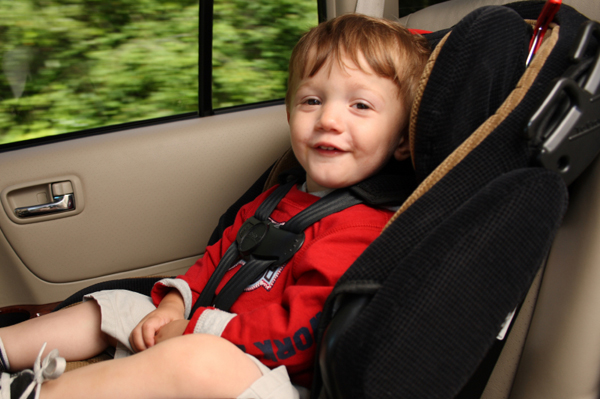
Happy preschooler in a car
Heading out on a road trip? Keeping little kids entertained while driving long distances can be tricky. But with a few easy tricks up your sleeve, you can keep them occupied for hours -- no video game required!
Some little kids are easy when it comes to car rides. They fall asleep when you leave and magically wake when you arrive or are content to look around and entertain themselves. For the rest of us, these games are sure to make the ride fun for them.

THE CAR GAME

What better to do on a busy highway then to take advantage of all the cars around you. This can provide an almost-endless supply of car-game fun. Brandi Nathan, co-founder of MyWorkButterfly.com, says that her family has two variations of the car game. The first one deals in color recognition. "Each child picks a color car. Who ever spies 10 cars first in their chosen color wins," says Nathan.
For a slightly more challenging game, the family uses states. "Pick a state: Whoever finds the 5 plates from their chosen state first wins," says Nathan.

FINGER PLAYS

In preschool classrooms, one of the first storytelling mechanism that kids learn comes in the form of fingerplays. These also make great car activities, since they are a completely free activity that requires no extra pieces.
"Fingerplays are fun in the car. They keep little hands and minds busy! "Itsy Bitsy Spider", "Where is Thumbkin", and "Open Shut Them" are some good ones," says Julie Bavington of Organize with Julie LLC.

TRAVEL BINGO

One of my fondest memories from childhood is taking a road trip with my best friend's grandparents to visit her in New Hampshire, where she lived. Her grandparents were so kind and generous--and literally thought of everything. They even brought car activities for me, including travel bingo. Although you can purchase sets, travel bingo is also easy to make at home.
"I make bingo cards before we leave the house by drawing or pasting pictures of things that we will see along the way. If it's a road trip I include pictures of things like stop signs, clouds, trees, etc. If it's a plane trip I might put pictures of an airplane, green suitcase, escalator, and so forth. To make it compatible for both my 3 and 5 year old I make my 5 year old find more than one or make it specific like it has to be a cloud shaped like a face," says Raquel Quaid, Co-Founder Baby Travel Pros (www.BabyTravelPros.org)

CAR DANCE

Kids and passengers can have a blast by moving to groove -- while staying buckled in their car seat, of course. Mom of one Desiree Wolfe says that her 20-month-old daughter loves to do this. "She loves upbeat dance or rock music. When I sing along or car dance she usually goes right along with me. When it's a song she doesn't like she shouts "more music" and we change the channel. I also invested in a couple of kid-friendly CD's and she gets a kick out of those when the radio isn't good enough," says Wolfe.

I SPY!

Similar to the car games, I Spy is a great way to keep kids entertained on car rides. Tanya Mitchell, VP of Research and Development for LearningRx and co-author of Unlock The Einstein Inside, Using Brain Science to Wake Up The Smart In Your Child, says that a game of I Spy can help with kids logical and reasoning skills.
So, how do you play? "The first person begins with the phrase, "I spy something that starts with the 'S' sound." The other players take turns guessing, and between each guess they get another sound clue, such as, "I see something that starts with the 'S' sound and is the color that starts with the 'R' sound." The game can also be played by looking for landmarks, signs and other common road finds.